Sidereal vs Synodic Month: Why Lunar Calendars Drift
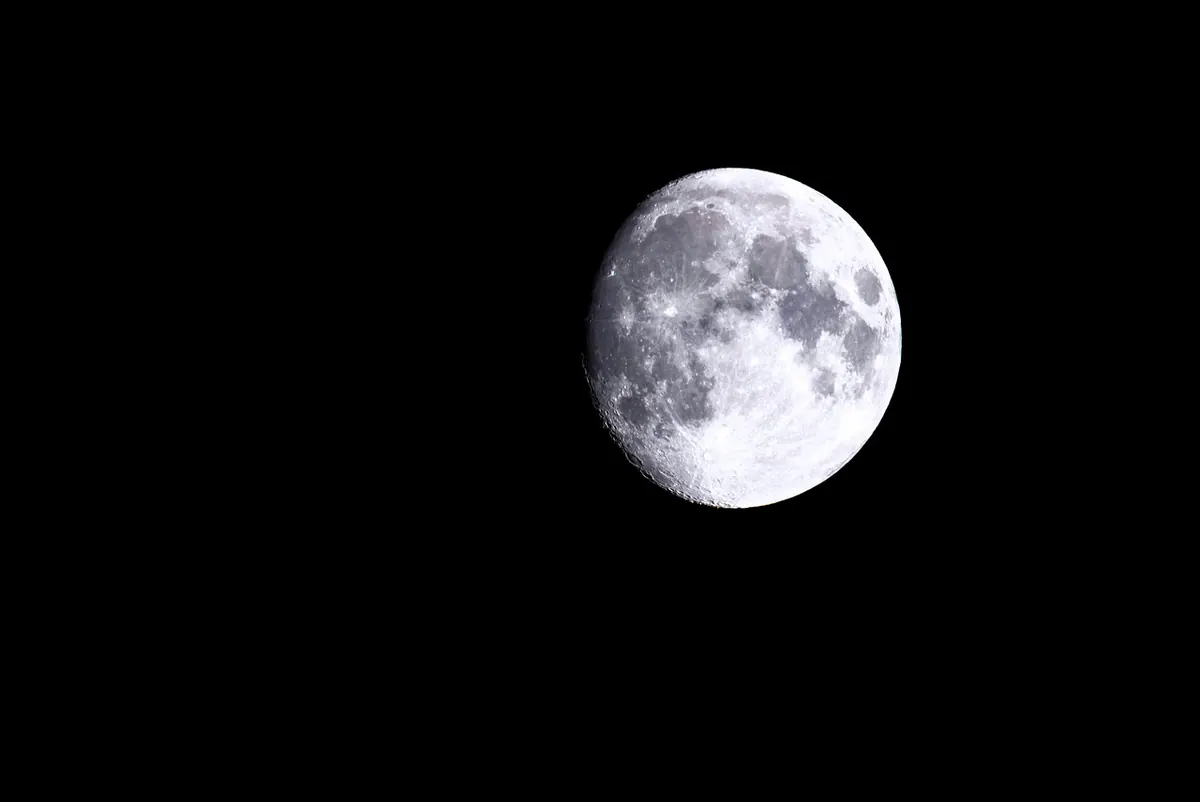
Watch the Moon for a month and you'll spot a small contradiction. Mark its position against the stars tonight and it comes back to nearly the same patch of sky about 27 days later. But the phase — thin crescent, half disc, full face — takes roughly two days longer to repeat. That gap is not a rounding error. It is the reason a purely lunar calendar slides through the seasons, the reason Ramadan moves through the year, and the reason a full moon that lands on your birthday this time will land somewhere else next time. Two clocks are running in the night sky, and they only agree by accident.
The Two Clocks in the Sky
The Moon keeps two separate appointments. One is with the stars: the time it takes to circle Earth and return to the same position against the fixed backdrop. Astronomers call this the sidereal month, from sidus, Latin for star. It lasts 27.32 days.
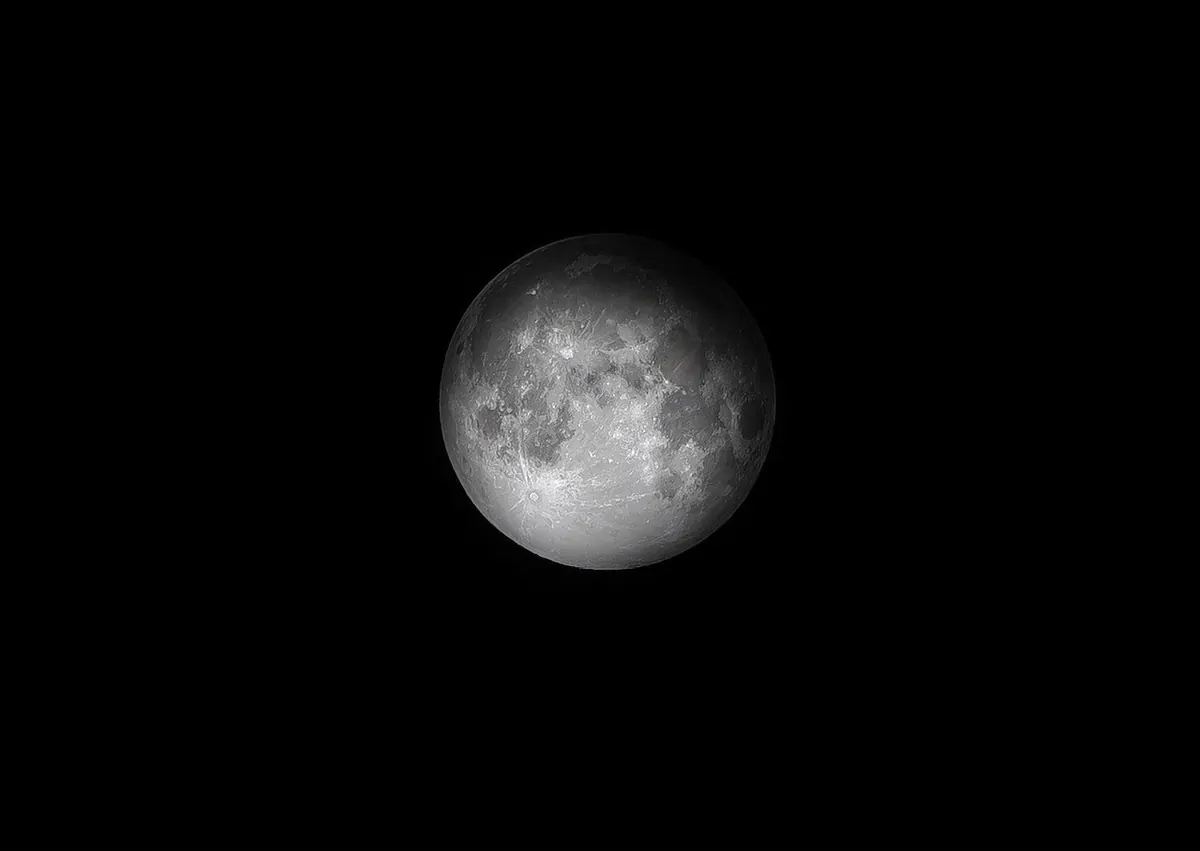
The other appointment is with the Sun — or rather, with the geometry of Sun, Earth and Moon. Phases come from how much of the Moon's sunlit half faces us, and that depends on the Moon's angular distance from the Sun in our sky, its elongation. The cycle of elongations, new moon to new moon, is the synodic month: 29.53 days.
One measures the orbit. The other measures the light.
Why the Synodic Month Is Longer
While the Moon travels around Earth, Earth is travelling around the Sun. In 27.32 days our planet covers roughly 27 degrees of its own orbit, about one degree per day.
That matters. When the Moon finishes a sidereal circuit and returns to the same stars, the Sun is no longer in the direction it occupied a month earlier. To line up with the Sun again and show us another new moon, the Moon must chase down those extra 27 degrees. Moving eastward against the stars at about 13.2 degrees per day, it needs a little over two days to close the gap.
Add it up: 27.32 plus 2.21 gives 29.53. That is the synodic month, and the 2.2-day difference is the price the Moon pays for Earth's own motion.
A way to picture it
Imagine a runner circling you on a track while you slowly turn in place. Their lap time never changes, but to stay in front of your face they must run a little farther each circuit — because "in front of you" keeps moving. The Moon is the runner. The Sun's direction is your gaze, and Earth's orbit is what turns it.
The Moon's Five Different Months
Because the Moon's orbit is elliptical and tilted, and because you can measure against several reference points, we end up with five respectable "months." Each answers a different question.
- Synodic — 29.53 days. New moon to new moon. The phase cycle, and the basis of every lunar calendar.
- Sidereal — 27.32 days. Return to the same star. The one to use when you want the Moon near a particular star or deep-sky object.
- Anomalistic — 27.55 days. Perigee to perigee, closest approach to closest approach. This governs when the Moon looks largest in the sky.
- Draconic (nodical) — 27.21 days. Node to node, where the Moon's tilted orbit crosses the ecliptic. It sets the rhythm of eclipse seasons.
- Tropical — 27.32 days. Measured against the vernal equinox rather than the stars, shorter than the sidereal month by only a few seconds.
Only the first of these concerns calendars directly. The others matter when you are planning an observation or trying to understand why eclipses cluster the way they do.
What Drift Actually Looks Like
Twelve synodic months total 354.37 days. A tropical year, equinox to equinox, is about 365.24 days. The shortfall is roughly 10.9 days.
A calendar built on twelve lunar months therefore finishes its year early, every year. In the Islamic (Hijri) calendar, which is deliberately lunar with no seasonal correction, a fixed date moves about eleven days earlier each solar year relative to the Gregorian calendar. Over roughly three decades it works its way through every season. If Ramadan falls in the depths of a cold December for you now, in a few years it will be November, then October, and eventually midsummer.
This is not a malfunction. A lunar calendar that tracks the Moon is doing exactly what it was designed to do. The drift only looks like an error if you expect it to track the Sun as well.
You can see the same restlessness in ordinary almanacs. Full moons arrive roughly eleven days earlier in the calendar each year, which is why some years squeeze in thirteen of them and others only twelve.
Why Some Calendars Fix the Drift and Others Don't
The Hebrew and Chinese calendars solve the problem with arithmetic. Nineteen solar years contain almost exactly 235 synodic months — the two totals agree to within a couple of hours. By inserting a thirteenth month in seven of every nineteen years, a lunisolar calendar keeps its lunar months intact while pinning the seasons in place. That is why Passover stays in spring and Chinese New Year stays in late January or February instead of wandering through the year.
The Islamic calendar takes the opposite route and stays purely lunar, which many consider a feature rather than a limitation. Both systems are internally consistent. They simply answer different questions: one tracks the Moon and accepts the drift, the other tracks the Moon and the seasons at once, at the cost of a more complicated rulebook.
Putting Both Months to Work
You can watch this play out with no equipment beyond your eyes and a notebook.
- Pick a bright star near the Moon's path — Aldebaran, Regulus, Spica, Antares — and note the Moon's distance from it each night. It moves about 13 degrees eastward per day and returns to the star after 27.3 days.
- Write down the date of each new moon. The next one comes 29 or 30 days later. Compare it with the date the Moon was back at your star, and the two-day gap appears in your own handwriting.
- For observing sessions, use the sidereal month to predict star conjunctions and the synodic month to plan dark-sky nights around new moon or bright nights around full moon.
- For calendar questions, assume any lunar date slides about eleven days earlier each year unless the calendar inserts leap months.
Learn both numbers and the night sky stops surprising you. You will know why the Moon sits beside the same star two days before it repeats the same phase, and why the date of a full moon keeps slipping away from you no matter how carefully you write it down.
Photo: Pexels / Pixabay

How to Plan a Moonlit Landscape Photography Session
Plan a moonlit landscape shoot by choosing the right phase, timing the moonrise, dialing in exposure, and...
Crescent Sighting Checklist for Ramadan and Eid
A step-by-step guide to preparing for a first crescent sighting: judging the geometry, scouting your...