Beginner's Guide to Reading a Lunar Calendar
A lunar calendar can look like a coded spreadsheet: a row of circles, a column of percentages, and pairs of times that shift every day. The good news is that you only need a few of those marks to plan a night outside. Phase symbols tell you the Moon’s shape. Illumination tells you how bright it will be. Moonrise and moonset tell you when it will be in your sky. Once those three pieces click, the rest of the page becomes reference material rather than a puzzle.
Start With the Phase Symbol
Most calendars show the Moon’s phase as a small icon. Depending on the design, new moon may be a black circle or an empty outline; full moon is usually a filled white or bright circle. Between those, you will see crescents, quarters, and gibbous shapes. The names describe the amount of the visible disk that is lit, not the Moon’s distance or size.
Waxing Means Growing
In the Northern Hemisphere, a waxing Moon is lit on its right side. The lit portion grows from a thin crescent after new moon to first quarter, then to a waxing gibbous, then full. A waning Moon is lit on its left side and shrinks from full to last quarter to a thin crescent before new moon. Southern Hemisphere observers see the mirror image: waxing is lit on the left, waning on the right. Near the equator, the crescent can look more like a bowl or a smile, depending on the time of year and your latitude.
If the calendar was made for the Northern Hemisphere and you live south of the equator, the icon may look upside down or reversed compared with what you see outside. That does not mean the calendar is wrong. It simply uses a different viewing convention.
Quarter Moons Are Half Lit
First quarter and last quarter are easy to misread. The word quarter refers to the Moon’s position in its cycle, not to how much of it is illuminated. At first quarter and last quarter, roughly half of the visible disk is lit. First quarter is your friend if you want a bright evening Moon. Last quarter works well if you want a bright morning Moon.
Illumination Percentage: Brightness, Not Direction
The illumination column gives the percentage of the Moon’s visible disk that is lit by the Sun. New moon is 0 percent. Full moon is 100 percent. A 25 percent crescent is less bright than a 75 percent gibbous, but the percentage alone does not tell you whether the Moon is waxing or waning. A 50 percent Moon could be first quarter in the evening or last quarter in the morning.
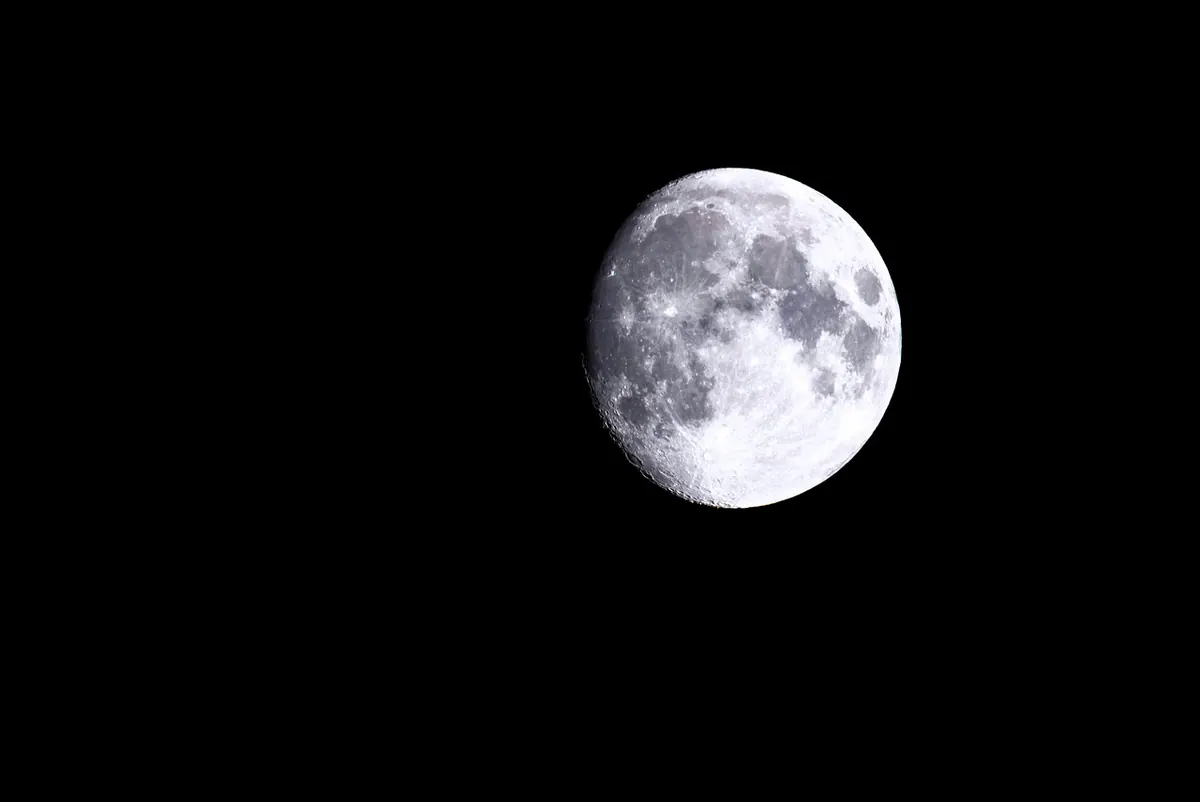
Use the percentage as a rough brightness guide. Above about 80 percent, the Moon is bright enough to wash out faint stars and the Milky Way. Between 40 and 70 percent, you can still see bright constellations and planets, but deep-sky objects suffer. Below 25 percent, the Moon is a slim crescent and usually stays near the horizon around sunrise or sunset. For the darkest sky, plan around new moon or simply check that the Moon is below the horizon during your observing window.
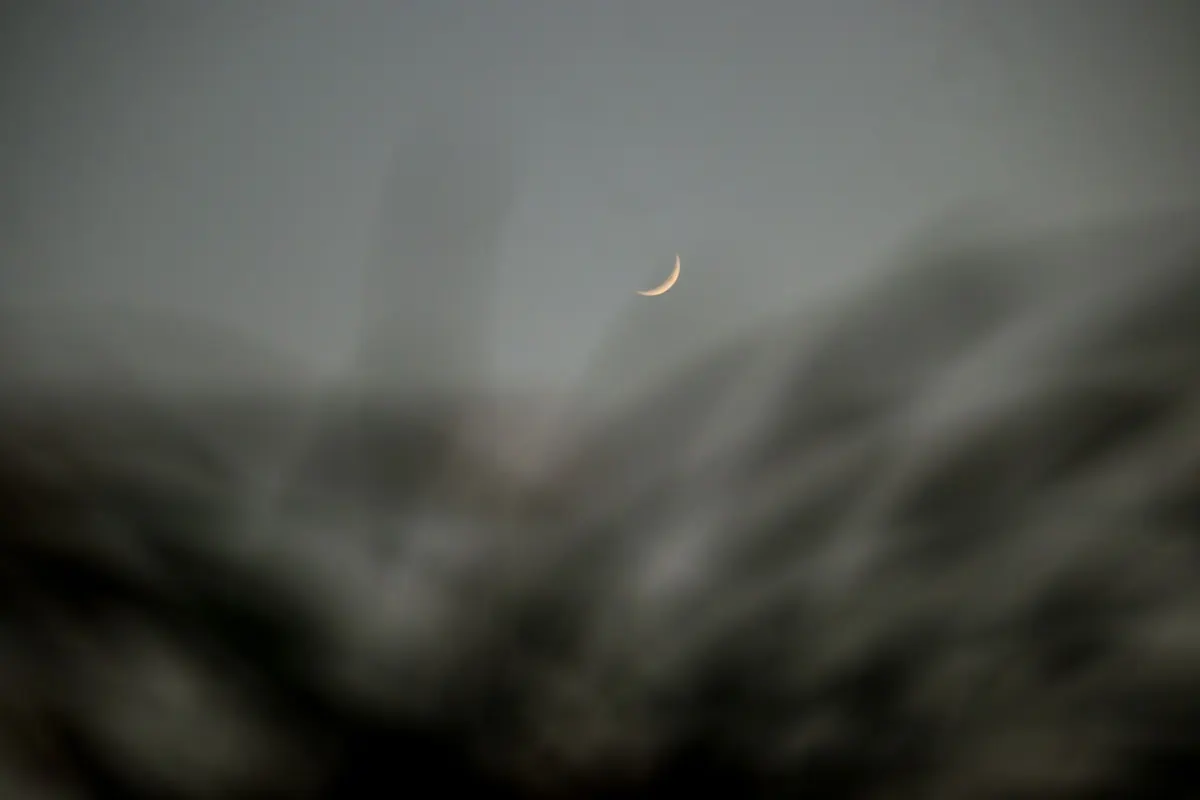
A 10 percent crescent is still obvious if you know where to look, especially during twilight. It is not faint like a star; it is a small, bright sliver.
Moonrise and Moonset Columns
Moonrise is when the Moon’s upper edge appears above the horizon. Moonset is when it disappears. These times are location-specific. A calendar made for London will be wrong for Los Angeles, and even a calendar for your country may use a different city. Check the fine print or the calendar’s settings for the location and time zone.
Times may be written in 24-hour format (18:42) or with AM/PM (6:42 PM). Blank spaces or dashes mean the Moon does not rise or set on that date in that location. That can happen because the Moon rises about 50 minutes later each day on average, but the actual delay varies. Sometimes the Moon rises just before midnight and sets the next day, or it stays above the horizon for most of the day.
Rise, Set, and Highest Point
The calendar usually does not list transit, the moment the Moon crosses the meridian and reaches its highest point. As a rough guide, that highest point comes about halfway between moonrise and moonset. The exact time depends on your latitude and the season, so treat it as an estimate rather than a schedule.
A Simple Workflow for Planning a Night
- Decide what you want to see. A bright Moon for craters, a dark sky for stars, or a thin crescent for photography.
- Find the date and note the phase symbol and illumination percentage. This tells you the Moon’s shape and general brightness.
- Check moonrise and moonset for your location and time zone. If the calendar does not name a city, assume the times may be off by a noticeable amount.
- Compare those times with sunset and sunrise. For an evening crescent, look for a waxing Moon with low illumination and a moonset one to two hours after sunset. For a morning crescent, look for a waning Moon with a moonrise one to two hours before sunrise.
- Decide whether the Moon helps or hurts. A full Moon is great for lunar surface detail but poor for faint galaxies. A new Moon is the opposite.
- Write down what you see. A few notes about the phase, time, and sky conditions will make the next calendar easier to read.
Common Confusions and Small Print
The Moon’s Age Column
Some calendars include the Moon’s age in days since new moon. Age 0 is new, age 7 is roughly first quarter, age 14 to 15 is full, and age 22 is roughly last quarter. The number is approximate because the Moon’s cycle is about 29.5 days, not exactly 28.
Icons and Percentages Can Disagree
A symbol may show a waxing crescent while the percentage says 48. That is possible near first quarter because icons are stylized. Trust the percentage and the waxing or waning direction more than the exact shape of the icon.
Your Local Horizon Matters
A Moon that rises at 6:30 PM may not be visible from your street until 7:00 PM if buildings or hills block the horizon. In valleys and cities, actual moonrise can feel much later. Plan a little extra time or find a clear eastern or western horizon.
Make the Calendar Yours
Start with one month. Pick a week when the Moon is near first quarter and step outside after sunset. Note where it is, how bright it looks, and when it sets. Then try a week near new moon and notice how many more stars appear. Do the same for a full moon and see how the landscape changes.
The numbers on the page are not a test; they are a forecast. You will learn faster by comparing the forecast with the sky above you. Keep the calendar somewhere you can check it quickly, and circle the nights that match your plans. Over a few months, you will stop reading the columns one by one and start seeing the whole month at a glance.
Photo: Matheus Bertelli / Pexels
How to Plan a Moonlit Landscape Photography Session
Plan a moonlit landscape shoot by choosing the right phase, timing the moonrise, dialing in exposure, and...
Sidereal vs Synodic Month: Why Lunar Calendars Drift
The Moon returns to the same stars every 27.32 days, but its phases take 29.53 days. That 2.2-day gap...