7 Common Mistakes in Crescent Moon Sighting
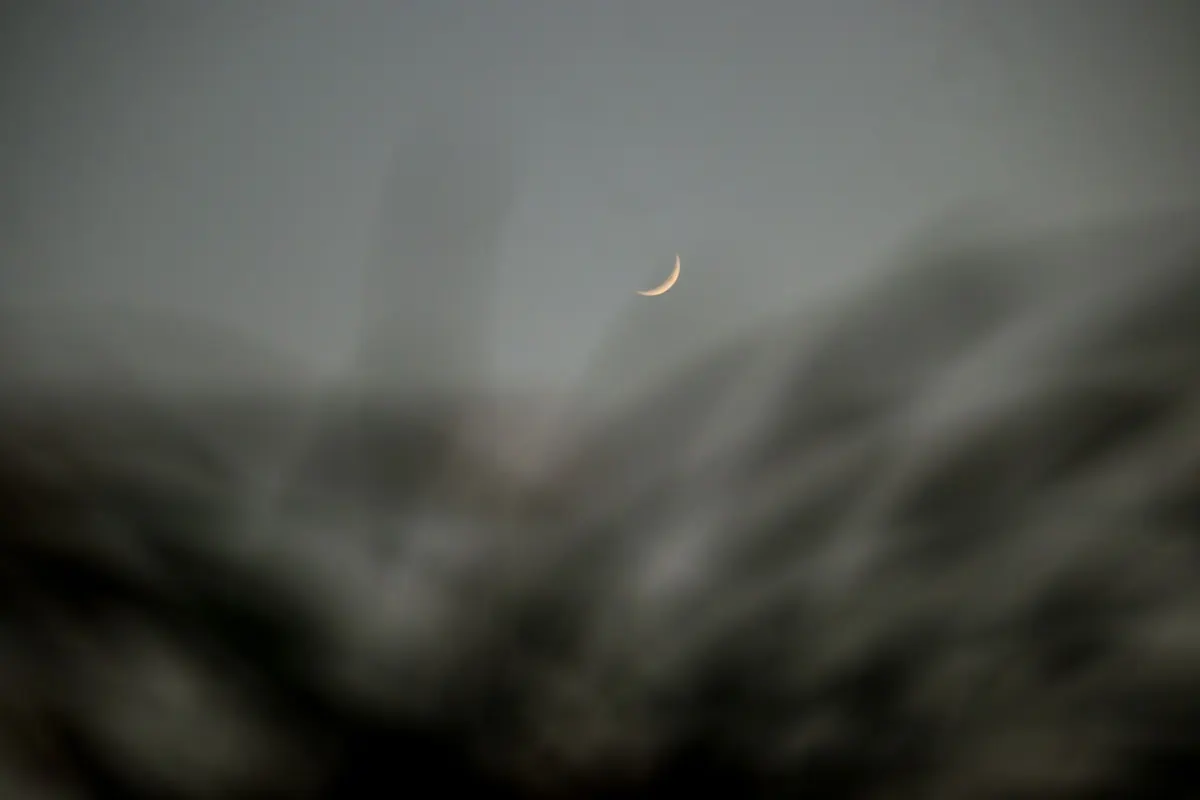
A crescent moon is easy to recognize once it is high and bright, but the first hour after sunset is a different matter. Twilight gradients, distant lights, thin cloud, and brilliant planets crowd the same narrow strip of sky. Most failed sightings are not failures of eyesight; they are failures of verification. Here are seven mistakes that regularly turn a promising evening into a false report, and how to avoid them.
1. Mistaking Venus or Another Planet for the Crescent Moon
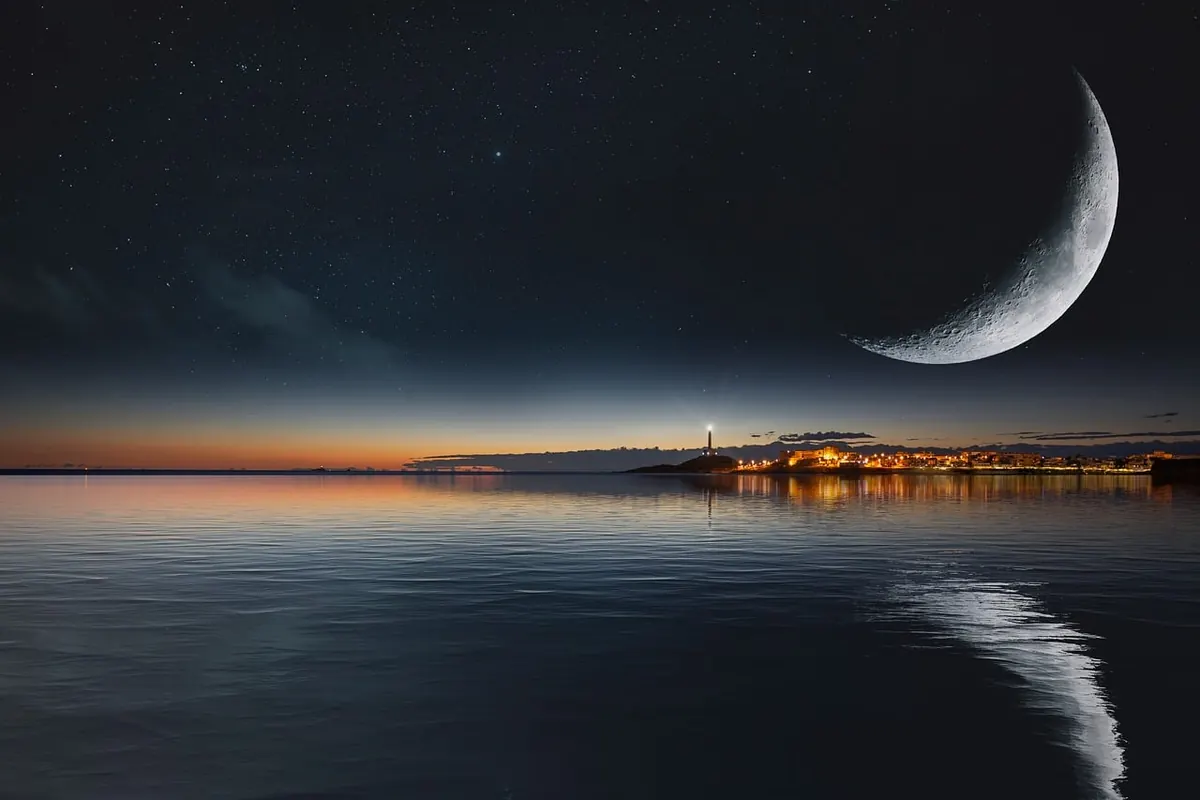
Venus is the usual suspect. It can blaze through twilight before any star appears, and when it sits low in haze it may swell into a soft, roundish glow. To the naked eye, however, Venus remains a point of light, not a disk with a curved edge. A true crescent moon shows a defined arc, a dark limb, and often earthshine—the faint grey light on the unlit side. That dark portion is the giveaway. If you cannot see a disk or an arc, you are probably looking at a planet.
Other planets can mislead too. Jupiter is bright but usually whiter and steadier; Mercury is quick and elusive, often lower and fainter; Sirius and Canopus can twinkle and flash colors near the horizon. Use this quick comparison:
- Venus: brilliant white, pointlike to the eye, no visible crescent without optical aid.
- Crescent moon: a clear curved sliver, larger apparent size, often with earthshine.
- Bright star: twinkles more, especially low down, and shows no disk.
Binoculars help, but focus them carefully. A slightly out-of-focus Venus can look like a tiny crescent. Check the shape again after focusing on a distant terrestrial light or star.
2. Being Fooled by Haze and Thin Cloud
Haze near the horizon acts like a dimmer and a diffuser. It can hide the moon completely, or it can smear a planet into a fuzzy blob that mimics a crescent. Thin cloud adds another trap: a patch of cloud lit from below by the set sun can glow with a curved edge. The cure is patience and context. Watch the object for several minutes. Real celestial objects move steadily relative to the horizon and stars; cloud edges change shape, fade, and drift. If the “crescent” disappears when you blink or shifts when you move your head, suspect an atmospheric or optical artifact.
3. Looking at the Wrong Time
Timing mistakes run in both directions. Start too early and the sky is still too bright; the thin moon may be invisible even though it is above the horizon. Start too late and the moon may have set, or it may have dropped into the thickest haze. The useful window is after sunset, as the sky darkens, but before the moon gets too low. A common approach is to begin scanning about 10 to 15 minutes after sunset, then keep checking for the next 30 to 45 minutes. Exact timing depends on your latitude and season, so use a reliable planetarium app or almanac to find the moon’s altitude and azimuth. Do not rely on memory. The crescent can be obvious at 10 degrees altitude and hopeless at 3 degrees, even on the same evening.
4. Forgetting the True Horizon
A clear western horizon is not the same as a clear sky. Buildings, trees, hills, and even a distant bank of cloud can sit exactly where the moon should appear. Many observers mistake the top of a cloud bank for the horizon and give up too early. Others mistake a gap in the trees for a sighting line. Before sunset, identify the true horizon and note any obstructions. If the moon’s predicted altitude is 5 degrees, you need a sightline that low. Use a compass or app to find the azimuth. A small change in location—moving to the far end of a field, a beach, or a higher floor—can turn a blocked view into a clear one. Also beware of mirages and temperature inversions over water or hot ground; they can lift, distort, or duplicate a distant light.
5. Trusting a Single Glance Instead of a Confirmation Method
One glance is not a sighting. A confident report should survive a simple test:
- Look again after 5 minutes. The moon will have moved slightly relative to the horizon and stars.
- Check the shape. The bright side should face the sun’s recent position below the horizon.
- Look for earthshine. The dark limb is often visible in a dark sky.
- Use binoculars. A crescent moon shows a clean, cratered edge; a reflection or planet does not.
- Ask a second observer to look at the same spot without telling them what to expect.
If the object fails two or three of these checks, treat it as unconfirmed. That is not a failure. It is good observing.
6. Overlooking Location, Weather, and Light Pollution
A dark site helps, but light pollution is not always fatal. The moon is bright enough to cut through urban glow once it is a few degrees up. The bigger problems are local lights in your field of view, wet or dirty optics, and poor transparency. Check the weather for high cloud, dust, and humidity. A forecast of “clear” can still mean a murky horizon. Arrive early, let your eyes adapt, and keep a red flashlight or dim screen. If you are photographing, do not judge the moon by the camera screen alone; focus manually and bracket exposures.
7. Misreading Optical Artifacts and Camera Screens
Binoculars and cameras can create crescents that are not in the sky. Internal reflections, lens flare, and a smeared point of light on a dirty lens can all look convincing for a moment. A windowpane adds another layer: you may be seeing a reflection of a streetlight or a distant lamp rather than the moon itself. When using optics, focus on a star first, then move to the suspected crescent. In photographs, check the original file at full size and look for a dark limb and earthshine. If the “moon” has no texture, no earthshine, and changes shape when you adjust the camera, it is probably an artifact.
A Practical Pre-Sighting Checklist
Before you claim a crescent, run through this routine:
- Find the moon’s predicted azimuth and altitude for your exact location.
- Pick a spot with an unobstructed western horizon.
- Start scanning after sunset, but keep checking as the sky darkens.
- Identify Venus, Mercury, and bright stars before they can fool you.
- Wait, refocus, and confirm the object’s motion and shape.
- Log the time, sky conditions, and what you actually saw.
A crescent moon is worth the extra few minutes. The difference between “I think I saw it” and “I confirmed it” is usually just one more look, one more check, and a little patience with the horizon.
Photo: ELG21 / Pixabay
How to Plan a Moonlit Landscape Photography Session
Plan a moonlit landscape shoot by choosing the right phase, timing the moonrise, dialing in exposure, and...
Sidereal vs Synodic Month: Why Lunar Calendars Drift
The Moon returns to the same stars every 27.32 days, but its phases take 29.53 days. That 2.2-day gap...