Best Moon Phases for Autumn Stargazing in the Northern Hemisphere
Autumn is generous to northern stargazers. Sunset arrives a little earlier each week, the night stretches out, and the humid haze of July gives way to sharper, cleaner air. The one variable worth planning around is the Moon, because its phase decides more about what you will see than almost anything else under your control. A well-chosen night near new moon can make a suburban backyard feel like a proper dark-sky session. A Full Moon will flatten even a remote mountain site into a grey, star-poor sky.
The Moon Decides More Than You Think
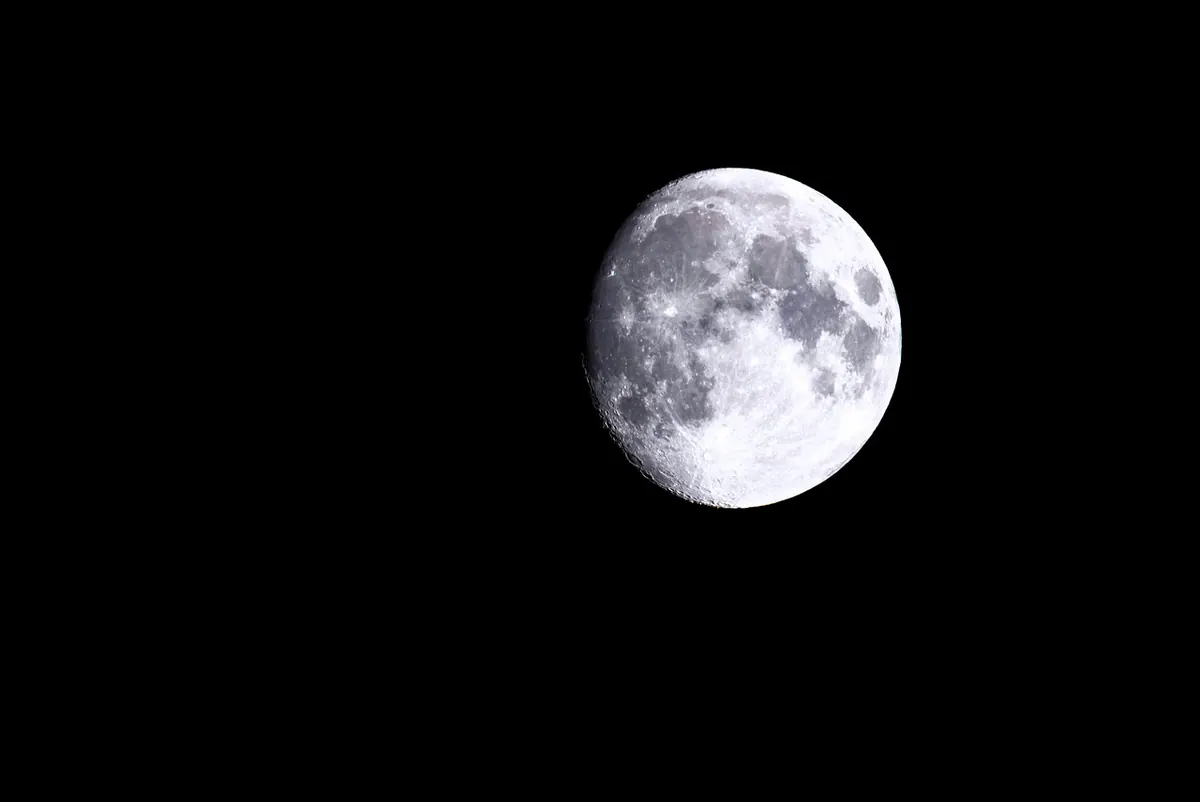
Light pollution usually takes the blame for disappointing nights, but moonlight is often the real culprit. Even a half-lit first-quarter Moon scatters enough light through the atmosphere to erase faint stars across a wide swath of sky. A Full Moon goes much further: it hides the Milky Way from all but the darkest locations and turns galaxies and nebulae into nothing at all.
The good news is that the Moon is entirely predictable. It rises roughly fifty minutes later each night, so the phase tells you two useful things at once — when the sky will go dark and how long it will stay that way. That makes the lunar calendar the most practical planning tool you own.
How Wide Is the New Moon Window?
At new moon the Moon sits between Earth and Sun, rising and setting with the Sun. It is simply absent from the evening sky. As the month goes on, moonrise slips later each night, until at last quarter the Moon does not appear until around midnight.
In practice, you get roughly ten genuinely dark evenings per lunar month. The window runs like this:
- Five to seven nights before new moon: the Moon does not rise until well after midnight, so your whole evening is moonless. These are the darkest nights of the month.
- Two to four nights before new moon: moonrise lands around 1 to 3 a.m., leaving the prime evening hours untouched.
- The night of new moon: no moonlight from dusk to dawn, and no visible Moon to distract you.
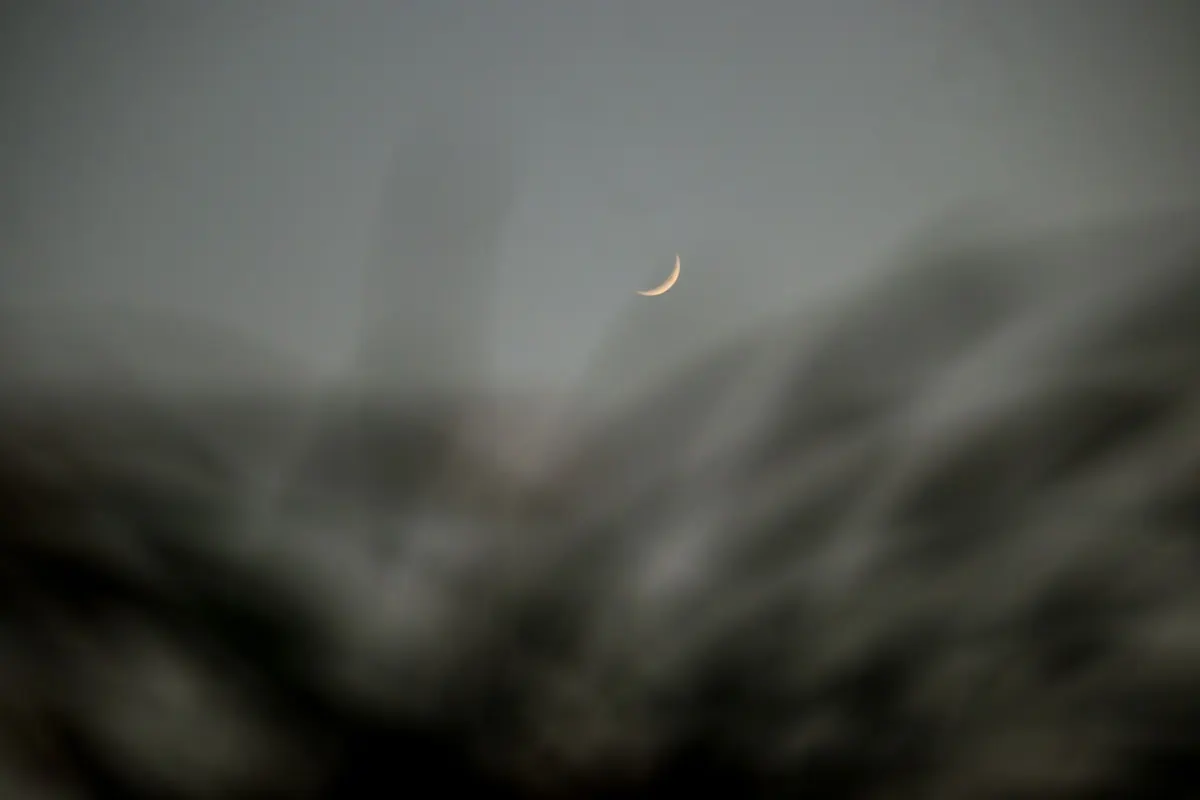
- One to three nights after new moon: a thin crescent sets within an hour or two of the Sun. The sky darkens fully soon after twilight ends, and the crescent itself shows earthshine — sunlight bounced off Earth lighting the Moon's shadowed side.
- Four to six nights after new moon: the crescent fattens and stays up later, so your dark window shrinks and shifts toward the small hours.
If you can only get out once this month, take the two nights before new moon. If you want a longer session, the nights right after new moon give you a dark sky plus a beautiful crescent to study while twilight fades.
What Each Autumn Month Brings
September. The equinox near the 22nd means darkness now arrives at a civilised hour. The summer Milky Way is still high in the west after dusk, running from Cygnus down through Aquila, while Pegasus and Andromeda climb in the east. Temperatures are usually mild, which makes this the most comfortable dark-sky month of the season.
October. Nights are noticeably longer and the air often clears dramatically behind the season's first cold fronts. Andromeda and the Great Square of Pegasus are highest in the evening, and the Orionid meteor shower peaks around the 21st — worth checking whether the Moon interferes that year.
November. Early darkness, long nights, and the winter sky beginning to rise. The Pleiades are well up by mid-evening, the Leonids peak around the 17th, and Orion clears the horizon before midnight. Frost becomes a real possibility, so plan for dew and ice on your optics.
December. The earliest sunsets of the year fall in the first half of the month, and the Geminids peak around the 13th. Orion is at its best by late evening. Cold, dry air often delivers the best transparency of the year, if you can tolerate the temperature.
Targets That Reward a Moonless Evening
Save these for the dark windows. They are either large and faint, or simply much better without scattered light:
- The Andromeda Galaxy, M31, and its smaller companion M33 in Triangulum — M33 in particular needs a genuinely dark sky.
- The Double Cluster in Perseus, a naked-eye smudge under good conditions and a superb binocular target.
- The Veil Nebula in Cygnus, which benefits enormously from a dark site and a nebula filter.
- The Helix Nebula in Aquarius, big and faint but rewarding with the right filter.
- The zodiacal light, that soft cone of glow rising in the east before dawn — autumn is the best season of the year for northern observers to see it.
When the Full Moon Is the Right Choice
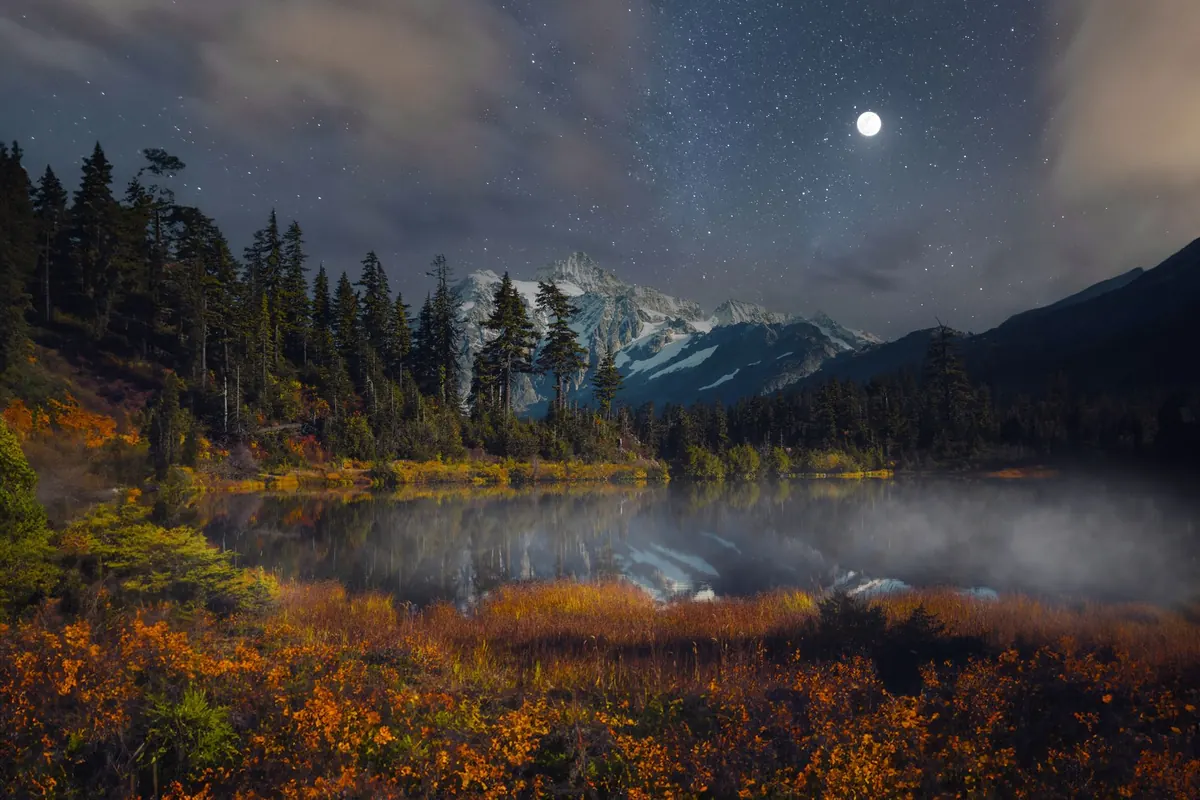
Not every session needs a black sky. The Harvest Moon — the full Moon closest to the autumn equinox — rises only about twenty to twenty-five minutes later each evening at mid-northern latitudes, instead of the usual fifty. For several nights in a row it appears near sunset, which makes it ideal for naked-eye moonrise watching and landscape photography. The Hunter's Moon follows a month later.
Bright nights also suit lunar observing along the terminator, where crater shadows are most dramatic; double stars and colourful pairs; bright open clusters; and the ice giants Neptune and Uranus, which reach opposition during the autumn months. Use those weeks to test new equipment, clean your eyepieces, and plan the next dark window.
A Working Routine for a Moonless Autumn Night
- Pick the date first. Find the new moon in an almanac or astronomy calendar, then circle the two nights before and the three nights after.
- Check the forecast the same afternoon. Autumn cloud can clear unexpectedly, but a confident clear-sky forecast is worth more than a perfect phase.
- Arrive before twilight ends. Twenty to thirty minutes of darkness is enough for your eyes to adapt, and you will be ready the moment the last glow fades.
- Start with objects in the west. The Milky Way and Cygnus sink steadily, so view them before the targets that rise later.
- Keep a red light and a paper list. Screens ruin dark adaptation; a written sequence keeps you from fumbling.
- Deal with dew early. A dew shield, a warm cloth, and keeping optics capped between views will save the second half of your night.
- Dress colder than you think. Autumn nights drop fast after midnight, and cold hands end more sessions than clouds do.
If you are driving to a remote dark site, tell someone where you are going and when you expect to be back, and check the route for ice before you leave.
Plan the Whole Season in One Sitting
Spend fifteen minutes with a lunar calendar at the start of autumn and mark every new moon through December. Around each one, block out the five or six best evenings and treat them as appointments. Two or three well-timed dark sessions per month will show you far more than a dozen spontaneous trips on whatever night happens to be free.
You do not need perfect conditions, a new telescope, or a long drive. You need a moonless evening, a little patience, and the willingness to walk outside when the sky is finally dark.
Photo: Luke Miller / Pexels
How to Plan a Moonlit Landscape Photography Session
Plan a moonlit landscape shoot by choosing the right phase, timing the moonrise, dialing in exposure, and...
Sidereal vs Synodic Month: Why Lunar Calendars Drift
The Moon returns to the same stars every 27.32 days, but its phases take 29.53 days. That 2.2-day gap...